
The Rising Value of Recommended Gangnam Jjeom-O in Digital Media Strategy

Two adults smiling in upscale lounge with blurred screen in nightlife setting.

Digital media thrives on evolving trends, curated experiences, and suggestion-based content. One such cultural touchpoint making waves is the concept of Recommended Gangnam Jjeom-O (강남쩜오 추천), a phrase that encapsulates trust, social proof, and a type of exclusivity all wrapped into one for perhaps the most divulged nightlife region in all of Seoul.

Elevating recommendation-like content on digital platforms elevates it beyond a mere list of suggestions. It is a content strategy that attracts a substantial amount of clicks, shares, and audience engagement interaction.

Why Recommendations Work in Digital Media

Digital audiences crave something that is real. These curated suggestions are more than ideas. They hold a perceived endorsement of some kind. Media outlets, influencers, or online platforms spotlighting a venue like Gangnam Jjeom-O create a recommendation culture. Emotional tenor gets constructed, and the audience feels as though they are part of an insider’s club.

Brands are able to use recommendations to structure certain behaviors for a long time. However, in the current digital age, algorithms also utilize the recommendations. Most often, search engines give recommended content a higher ranking, increase dwell time, and increase the probability of social shares. Gangnam Jjeom-O, positioned as a premium lifestyle experience, fits wonderfully within this framework.

The Influence of Lifestyle Content in Media Narratives

The media on lifestyle and entertainment recognizes the significance of location-driven narratives and positively curates places that inform and inspire. The aspirational experiences of the local and global audiences connected with the Gangnam Jjeom-O help publishers and content creators cultivate aspirational stories.

This form of storytelling turns the recommendation into something beyond advertising—it becomes a form of social critique. The recommendations for the nightlife mirror broader social dynamics when younger audiences try to locate authentic content. In this case, the recommendation from XR Ide to go to Gangnam Jjeom-O represents a lifestyle rather than just a location.


ALSO READ: What the Media Gets Right and Wrong About Word Cookies


The Sponsorship Strategy of Content-Based Recommendations

For the digital media industry, recommendation content goes beyond viewership to include financial gain. Gangnam Style epitomizes this hypothesis because of the wide acceptance of its cultural capital in business models, making it a good example of how content strategies can unify culture and profit.

In addition, the narrow focus of recommendations strengthens niche authority. Media touches that consistently showcase applicable personalized activities become industry leaders. In turn, that helps them to build repeat readership and unlock partnerships with advertisers seeking to offer them to a targeted audience.

Recommendations as Future Content Strategy

The growth of digital platforms is likely to enhance the recommendation culture. People will increasingly receive curated suggestions, spanning from nightlife to travel, as AI personalization continues to grow. Media companies that appreciate how to harness the cultural currency of recommendation, such as the case with Gangnam Jjeom-O, will continue to win the audience attention race.

Overall, recommendation-driven content is more than a fleeting phenomenon; it is a trust, culture, and audience engagement integrated strategy. Digital media content puts forth the content people wish to aspire to, and it uses recommendations to build storytelling and incredibly powerful persuasive media.

From Newsroom to New Home How Legal Expertise Helps Media Professionals Settle in Texas

Lawyer assists two journalists reviewing residency documents inside a bright modern Texas office.

Relocation is common in the media industry, so people might chase opportunities in fast-growing cities in Texas or settle down somewhere after working on the move for many years. Journalists, broadcasters, and content creators will always be dealing with the Texas state laws for marriage and divorce for people from other states.

For people trying to settle down somewhere, the Texas residency lawyer is probably the most innovative attorney around. These legal guides help prevent the hijacking of paperwork, which is often controlled by relocating and taxation processes.

These laws ensure that interstate and intrastate relocations comply with state and federal regulations, taxation, and necessary paperwork, integrating these elements with other related processes and dues from different states.

The state attracts media personnel due to its growing local media, emerging digital economy, and reasonable living expenses that are significantly lower than those in traditional media centers like New York and LA.

However, despite the exciting career opportunities Texas offers, many people still discover themselves lost in the complex legal residency requirements related to income tax, property ownership, and professional licensing.

Understanding Residency Beyond the Headlines

The more different states one works for, the more complex the specifics become. For many editors and reporters who travel to do assignments, proving Texas residency, for legal reasons or for funding, is more complex than it seems.

An experienced lawyer helps local law apply to media employees whose income and assets span multiple states. From the verification of domiciles to the visa or work permit transitions, a Texas attorney helps the professionals focus on their work rather than on the documentation processes.


ALSO READ: What the Media Gets Right and Wrong About Word Cookies


Legal Clarity Fuels Creative Freedom

Time is money for the media professionals. Not being able to fulfill a deadline or a scheduled broadcast due to pending legal issues might tarnish a career. This explains why so many professionals seek the services of lawyers who understand both the legal frameworks of the state and the intricacies of present-day media work.

A number of trusted professionals actively work to minimize the burden of paperwork. An attorney with this mindset makes sure that leases, tax documents, or proof of residency address all documents supporting the person’s claim of residency.

This proactive mindset reduces the likelihood of ever facing challenges from tax authorities and licensing boards. Most importantly, it makes it possible for professionals to engage in sufficient reporting, storytelling, and production without facing hindrances from legal frameworks.

The Wider Outlook on Professional Security

The move to Texas is not simply a lifestyle change but most commonly a career move. Texas is developing new opportunities due to the burgeoning television, digital, and publishing industries that require a stable legal foundation. Since journalists and creators are relocating to new communities, legal immigration assistance is imperative to make sure their migration is secure and lasting.

A Texas residency lawyer addresses more than just the administrative problems. They enable professionals to integrate into the media marketplace and advocate for success in the region and for the diaspora.

The Media Evolution Behind Gangnam’s “You & Me Karaoke”

Located in the middle of the entertainment sector in Seoul, You and Me Karaoke (유앤미가라오케) has become more than a simple entertainment venue. It has also come to signify the intersection of media, technology, and culture to form an experience that is more about telling a story than it is about sound.

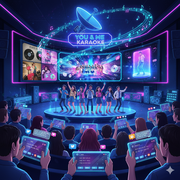
An energetic digital illustration depicting a futuristic karaoke stage with a group of diverse young adults singing under bright spotlights.To the media industry, karaoke is a point where audio engineering, visual design and performance art collide. The lighting choreography, the quality of microphones, the reactiveness of the screens, all these facets reflect the accuracy of media production. The shirt room karaoke bars of Gangnam have brought that to another dimension. This is by combining an immersive design with bespoke service to provide an almost cinematic type of leisure.

When Media Goes Interactive

The old media had been based on a distinct separation between producers and consumers. But places such as You and Me Karaoke blur that frontier. In this case, any visitor is a performer, any moment an improvised broadcast. The lamps follow the coloring of the music. The electronic sound arrangements balance out each note automatically. And, the high definition lyric screens follow the action like a teleprompter in a live concert.

The most interesting thing is that these moments go outside the room. Visitors capture their performances and share them on social media making momentary feelings permanent. It makes a karaoke session a micro-media production. It is evidence that modern communication is becoming more and more participatory.

The Purpose of Feeling in Contemporary Media

At the age of information overload, audiences are seeking authenticity in a digital environment. Karaoke provides just that. It has no post-production, no editing. It has pure human emotion. Making their voices sing out a soul ballad or a fun pop song will become a true performance. And in nightlife in the bustling Gangnam, You & Me Karaoke is a place where these pure, rough voices can be heard.

Bridging between Media and Experience

Karaoke rooms, just like the film industry, aim to carry away their viewers as well as the participants into their own stories. With this change through the prism of media, entertainment ceases to be the viewer observing others in action but within the action itself.

Read some articles like engaging audiences through interactive media to learn further how participation among the audience is transforming media practices around the world.

Winding-Up: Where Sound Meets Story

You and Me Karaoke embodies the essence of the new media, interactive, emotional, and personal. It is where performance intersects technology and where each individual turns out to be his own narrator. It is not merely a tool, but a tool of sound and self-identification, the microphone.

Karaoke is one of the most personal media communications in an age of connection.

𐌢